|
Sheer Verve
John Reed charts the Wigan bands triumphant comeback
Frowning, awkward, charismatic, single-minded, passionate,
intense, gifted, complicated and incredibly striking - Richard Ashcroft
is without doubt the Face Of '97. His gaunt expression stares moodily
out from newstands and billboards everywhere, all piercing, deep-set
eyes, a pouting expression and razor-sharp cheekbones. He looks like a
man in a permanent bad temper but if you look closely... very closely...
you may just spot the first inklings of a smile.
Ashcroft, you see, has just cause to celebrate. Since the summer, his
band the Verve have returned from their two-year, selfimposed (neon)
wilderness to notch up two jaw-dropping singles, "Bitter Sweet Symphony"
(No.2) and "The Drugs Don't Work" (No.1), and a chart-topping third LP,
"Urban Hymns" (selling quarter of a million copies in a week, no less).
Only now, it seems, had the music caught up with promises of stardom,
the hyperbole and features that screamed "rock star", a face which was
both Jagger and Richards and a nose that had survived being broken four
times, sacrificed while Ashcroft had pursued as a child his previous
dream of playing for Manchester United. Pardon my mischief: other bands
are too sheepish or follow trends, sheep-like; from certain angles,
Richard Ashcroft simply looks like a sheep.
Back in summer 1995, the Verve's fortunes weren't so rosy: after
appearing at the T In The Park Festival, Ashcroft issued a curt
statement, out of the blue, announcing the band's demise. No reasons
were given; and this from a man who had ravenously courted fame with
grand gestures and lofty, self-aggrandising statements ever since
Verve's arrival in 1991. Like other 'Manchester' bands before (the Stone
Roses) and since (Verve's mates, Oasis), Ashcroft's ardent, heartfelt
desire to make Verve special, to lift them exultantly free from the
grimy, ever-so-'umble, work-aday nature - the inconsequentiality - of
the in die circuit, had literally defined the band. To say that the
Verve figurehead was seen as precious is an understatement.
From the start, the Verve (or, back in those days, just plain Verve
before the U.S. jazz label had a moan) reached for the stars. With
apologies to R. Kelly, it seemed Ashcroft really believed he could fly -
both live and on record. On stage, his idiot dancing and his Tim
Burgess-playing-Jesus Christ poses, all a-mouth pout and vacant stare,
fell midway between Primal Scream's Bobby Gillespie (he of the
limp-wristed handclap) to the Doors' Jim Morrison (whose narcissistic
hogging of the limelight begged comparisons with Ashcroft). On record,
too, early Verve vinyl dabbled in a 90s space rock that drifted off into
the ether.
Maybe such ferocious ambition was fuelled. by the outwardly unglamorous
image of Verve's hometown. Even to their more sophisticated urban
cousins in Manchester, the mention of Wigan attracts sniggers - "aye,
they're pie-eaters oop there, lad. It's all flat caps and whippets."
Hmm, but weren't Verve all about spectral soundscapes which painted
aural pictures that threatened the space-time continuum, which
transfixed their audience - where song titles were meaningless, where
one set supporting Spiritualized at the T&C ended with a 25-minute song?
Yeah, strange, that: not what you'd expect from Wigan.
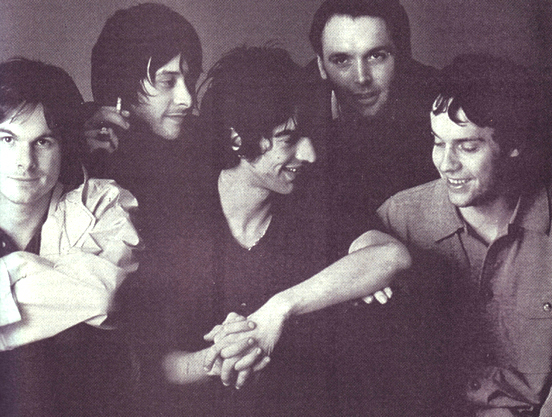
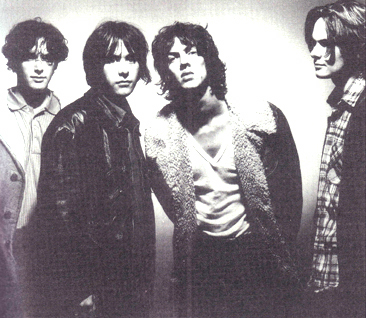
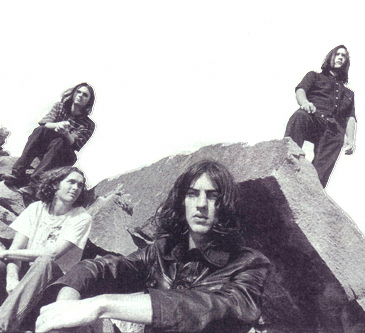
The Verve are
younger than they look: the original foursome formed in Upholland, just
outside Wigan, in 1990 when they were 18ish. Having written songs in
their bedrooms; the violently skinny Ashcroft and bassist Simon Jones
roped in school friend, drummer Peter Salisbury, followed by guitarist
Nick McCabe from their sixth form college, Winstanley. Verve were
officially born that August with a local birthday party pub gig and all
the ingredients were there, from Ashcroft's meandering vocal wails to
the band's, er, meandering, effects-laden music. Hiding behind gaunt
features, long hair and skinny-rib attire that shunned Madchester's de
rigeur Baggy uniform, the band rotated gigs in nearby indie haunts like
the Citadel in St. Helens and Manchester's Boardwalk over the ensuing
months.
They left an immediate impression. Clearly, everyone (from
the numerous major labels who'd responded to demo tapes to early
reviewers) was captivated by Ashcroft's star appeal, and the
Virgin-funded Hut label snapped Verve up after their very first visit to
the smoke (that's London, you southerner). By March 1992, on the eve of
their debut single, Verve were already attracting ridiculous adulation
from some critics (notably, Melody Maker's Steve Sutherland, now NME
editor), who all but hailed Ashcroft as the new messiah.
In fact, the
jury was out on the band - at least initially. Verve were the next Great
White Hope to follow Suede - but whereas Brett & Co. proved to be smart
gameplayers in that rocky road between critical fervour/ favour and
commercial nous, Verve issued a string of unfocused pieces (songs would
be too restrictive a term), which explored instead the possibilities of
multi-layered electronic sound. Clouds of ethereal, hypnotic music
washed across the speakers like a boat at sea, the waves sometimes
crashing violently, at others scarcely creating a serene ripple. Cynics,
alternately, denounced them as hippie hogwash, self-indulgent
progressive rock created in a druggy haze. As one writer put it, the
musicians spent their gigs studying the dust patterns swirling around
the heads of their audience.
Their first EP was promising, though. "All
In The Mind" was a pleasant assault on the senses, a bleak, dissonant
funk workout which finally introduced two long-lost cousins, Can and the
Happy Mondays; "Man Called Sun" was a mesmerising shimmer of the Doors'
"Riders On The Storm"; and the too-long "One Way To Go" probed the same
ambience as Durutti Column or that Stone Roses flip to "One Love".
The follow-up, "Superstar", was even more atmospheric, a ponderous epic
which was born heavy but ebbed and flowed like some scary, unpredictable
soundtrack; its companion, "Feel", took soporific monotony to new limits
before building to a soft destruction, at once beautiful/mellow/dreamy
and mind-numbingly boring. True, Verve were following their muse but
this was commercial suicide (despite topping the indie chart, they were
plainly falling short of their considered potential).
The "Gravity
Grave" EP trod water, too, the lead track slumped over a mournful pulse!
echo, as if the Velvet Underground were interpreting whale noises before
drifting into some dream state. "Endless Life" was lulled into
submission by monotone, half-whispered voices and keyboards -. like Pink
Floyd's "Julia Dream" after a bad car accident - before emerging from
its stupor to pick a fight with the speakers.
Maybe this is as good a time as any to broach the awkward genre that was
'shoegazing'. The term was invented by the music press to describe the
indie scene's drift into aural confection, a wistful music that
substituted rock'n'roll raunch for stoned radiance - and ten million
effects pedals. Inspired by both the bitter-sweet symphonies (sorry!) of
My Bloody Valentine and the choral majesty of the Cocteau Twins, bands
like Slowdive, Catherine Wheel, Ride, Chapterhouse, Lush and (to
a'lesser extent) Curve created a music that evoked colours, hues and
moods rather than more obvious emotions. A new psychedelia, if you will.
Even Blur were tagged with the shoe-gazing brush (due to Graeme Coxon's
penchant for lengthy descents into guitar dissonance).
Verve were
different, insofar as their music felt closer to the psych paranoia of
Terry Bickers' Levitation, the heroin rocks of Spiritualized/Sonic
Boom/Spacemen 3 or the wigged-out experiments of Bark Psychosis. Where
many so-called shoegazing acts were too demure, Verve's music felt
yearning and hungry; the listener was, according to one fan, "lost in a
sensual bath in which you became lost, entranced, irradiated". Despite
exuding an arrogant glamour, Ashcroft's stage theatrics were way too
absurd for shoe-gazing cool and their improvisational spontaneity was
too, how should I put it, Rock.
Their next single, "Blue", was a
masterpiece. A rotating rhythm of loping guitars chugged along as
Ashcroft offered his most straightforward song to date. Reworking the
spirit of Echo & the Bunnymen at their finest or, dare it be said, early
Simple Minds, "Blue" felt like the headrush of a good night out. It had
a structure. It was a step forward. The other songs, by contrast, felt
like a trip to the medicine cabinet the next day, from the leafy,
Sunday-setting blues of "Twilight" - acoustic, harmonica and a vocal
whimper (think Primal Scream's "Damaged") - to the spooky bedsit
balladry of "Where The Geese Go" and the sedative charm of "No Come
Down".
Despite their self-aggrandising ideals, Verve's first album, "A
Storm In Heaven", had an air of anti-climax. It was received favour ably
enough, but by summer 1993, music once more had tilted on its axis and
Britpop was just around the corner - Blur had just created "Modern Life
Is Rubbish". Maybe the problem was more-of-the-same, refine ment rather
than reinvention. A surefire highlight was "Already There", a
schizophrenic mix of featherlite touches and grinding guitar shades.
"The Sun, The Sea", too, was refreshingly unpredictable, from its sax
break (a la Stooges' "Funhouse") to the momentary madness of wildly
mutated guitar, Ashcroft sounding like some desperate, angst-ridden
crooner - on drugs.
"Slide Away" was the obvious choice as Verve's next
single. With echoes of the moodybut-handsome strength of Creation-era
House Of Love, the song coupled Ashcroft, all wideeyed and angry, with
flaming guitars sparring over a killer riff. "Butterfly", meanwhile, was
a gutteral slide blues gem, and the odd flute or brass extended the
soundscapes' horizons. But the LP wasn't the masterpiece Ashcroft had
promised.
Instead, "A Storm In Heaven" marked the end of an era for
Verve. Out went the flowing locks and disorientated/disorientating
collages that were forged out of stoned jams. And in came songs which at
last fulfilled Ashcroft's burning ambitions - an attitude, incidentally,
which the singer attributes to the death of his father when Richard was
just eleven. Like Everything But The Girl's Ben Watt, who famously
stared death in the face after developing a potentially fatal condition,
Ashcroft displays the intense drive of someone who's witnessed the fragility of
existence first hand.
In 1995, the Verve returned with a new muscle, a
renewed vigour that was born not only of frustration but also of touring
with the Black Crowes and enduring spells on Lollapalooza, Penny
Farrell's rock'n'roll circus across America. The States,
incidentally, welcomed Verve with wide-open arms, hence two
export-only collections 1of out-takes and B-sides, "The Verve EP" and
"No Come Down", l and an official live bootleg, "Voyager 1", ostensibly
designed for American consumption.
Probably the strongest persuasion to
develop, though, was Oasis, who supported Verve on tour in late 1993. The
two bands have since maintained something of a mutual admiration
society and he streamlined barrage of guitars and attitude of early Oasis
must have rubbed off. Inevitably, tales of rock'n'roll debauchery were
soon linked to Verve - they were banned £rom London's legendary rock
resting place, The Columbia Hotel, for example.
Instead of wallowing
in aural dry ice, Verve now felt like a lean, mean blast of hot air. To
return to the Floyd analogy, the virginal "Julia Dream" - now shared a bed
with the hedonistic heavy metal thunder of "The Nile Song". To be blunt,
it felt like Verve's balls had dropped.
The first signs of this
revelatory pubescent experience was "This Is Music" in brink-of summer
1995. Smack! The grinding, all-of-sound guitars pummelled you into
submission as Ashcroft got straight to the poin: "I stand accused just like
you of being I without a silver spoon". Impact! The pening statement of
intent was even printed on. Ashcroft's sandwich-board on the front cover.
Whack! No vague underwater ramblings: just a grand, rollercoaster juggernaut
ride as an excuse to celebrate rock'n'roll. Chur-Ching! The Verve
went Top 40. Yes!
"On Your Own" was swiftly snapping on its heels - in
the nicest possible way, since its roosty acoustic balladry was
essentially a vehicle for an Ashcroft love song (yep, proper emotional
stuff, with soulful falsetto vocals to boot). Maybe Verve had got a taste
of the spirit of Britpop and thought, let's have a slice? Nah. It's just that they'd turned off
the effects petals and written some decent songs
All of which paved the way
nicely for "A Northern Soul", Verve's second album, in July. First
impressions begged comparison with the more intelligent aspects of U2,
without the pomposity. Ashcroft sounded a tad like Bono, too, or a
bleaker Ian McCulloch, but the breadth of vision was stunning. "A New
Decade" set the scene - "the radio plays the sounds we make and
everything seems to feel just right", bragged Ashcroft, "so come along
and listen with me", as the leaden pace was dragged along in the
jet-stream of guitars. To Verve, 1995 was the start of a new decade.
What else? Oh, too many songs to mention. "A Northern Soul" itself was a
weird spacefunk workout that pulsed along as Ashcroft delivered a
cathartic rant: "I'm alive with something inside of me that I can't get
out". That bled into the mental confusion of the evocatively-named
mindfunk, "Brainstorm Interlude". The anthemic "Knock On My Door" shared
grooves and guitar leads with Oasis and the Stones. And the closing
"Cloud"/"(Reprise)" may have
dipped somewhat but still carried "A Northern Soul" off towards a
spectacular sunset.
But then something snapped and the Verve vanished.
For two years. No public reasons were given; Ashcroft and Co. just
pulled back from the brink of enormous success and retreated into the
shadows. It felt like one of rock's biggest anti-climaxes: after one of
the 90s' most blatant exclamations of audacity, a vacuum. As a swansong,
Hut went ahead with the next single from "A Northern Soul": the
poignantly-named "History" was a yearning, incredibly moving acoustic
ballad about lost love that built to a spine-chilling climax. It had
that special quality lacking, for example, from Oasis's "Whatever". And
its intense string arrangement paved the way for the future.
Occasional
stories filtered out later. The Verve had had "differences" with Nick
McCabe and were now working with a new guitarist, Simon Tong - but it
wasn't to be called Verve. In 1996, Ashcroft then popped up playing
some new tunes on acoustic guitar at an American Oasis gig - but nothing
more was heard.
Out of the blue, then, Verve re-emerged this summer -
swelled by second guitarist Simon Tong. "Bitter Sweet Symphony" was
rightly greeted with universal praise, and its canny use of an old
string-laden backing track felt like a clever, rock variation on
"E.V.A." (you know, the music from the Lucozade ad). Its soaring groove
perfectly underscored Ashcroft's lyrical quest for identity and the
meaning of life - "I feel like a million different people from one day
to the next/I can't change my mould" - and the single soared to No. 2 as
the Verve were hailed as the most important band of the year.
The
acoustic lament, "The Drugs Don't Work", went one place better, topping
the charts with a sombre tale that wasn't so much a "Just Say No"
message as a vehicle for an other of Ashcroft's downbeat love songs.
It's a beautiful tune but few songs have so captured the Zeitgeist. The
single was issued in the wake of Diana, Princess Of Wales' death, when
the nation was whipped up into a frenzy of near-hysterical public
mourning. Had the tragic accident not happened, Chumbawamba's
"Tubthumping" would probably have won out; as it was, "The Drugs Don't
Work" caught the mood.
And so to Verve's recent No.1 LP, "Urban Hymns".
It shares more with "A Northern Soul" than the reviews would have us
believe - though it's more restrained/considered and occasionally
Radiohead/U2-like, and heavier on Ashcroft's 'solo' songs, of which
"Sonnet" is arguably the finest. To these ears, the album's peaks lay
elsewhere in the group compositions. "Rolling People" sports a lolloping
vibe, menacing and bluesy, "Neon Wilderness" is just that, resembling
those sprawling, poetic Doors epics, and the forthcoming single, "Lucky
Man", builds to a shuddering climax - Verve's "Hey Jude" or "All You
Good, Good People". The album could have been wilder and less
predictable - but what the heck.
From nowhere, then, Verve are the
mosttalked about band in Britain. Their performances at Oasis's Earls
Court shows were, by all accounts, remarkable and "Urban Hymns" has a
mainstream accessibility which should win friends and influence people
in foreign climes. "History has a place for us," said Richard Ashcroft
in 1993. "It may take three albums but we will be there." Spooky. Damn
spooky.
1990
Aged between 18 and 20, Verve form at college in Upholland in Wigan, Lancashire
drummer Peter Salisbury, bass player Simon Jones, guitarist Nick McCabe and the stronglyfeatured Richard Ashcroft (singer and lyricist), who's "been in bands since he was 17".
15th August: The Honeysuckle pub, Wigan, plays host to Verve's first gig, at a friend's birthday party. Wayne Griggs (alias Music Of The Spheres) DJs - and spins records at every Verve gig since.
1991
3rd February: An eight-song gig at Manchester's famous Boardwalk prompts an enthusiastic review in The Wigan Reporter: "By the second number, they were cooking on gas, singer Richard had the crowd of over 200 eating out of the palm of his hand." Further dates at the venue follow.
9th March: Verve play the decidedly unglamorous Bolton Institute Students' Union.
16th March: "Dole lads on the brink of success", runs the local headline as Verve attract a "packed house" at the Citadel in St. Helens. A demo cassette lures A&R men from WEA offshoot East West: "We're on the dole so we had to save up for a while before we could afford the £200," says Richard. Verve's aim, it seems, is to concentrate on moving the body rather than the mind. "We don't want to be too heavy. We just want people to enjoy our music," says Richard, who modestly predicts
, Verve will be the biggest band ever. The band return to the Citadel on several occasions.
23rd March: "Wigan's not big enough for the' both of us," say Verve as local rivalry prompts more regional publicity over a double-bill with
Wigan band, the Tansads, at the town's Mill At The Pier. Verve are adamant they aren't so much supporting as playing the gig "to show Wigan who is boss". In an article under the banner "Band War Breaks Out", Verve state their influences as Funkadelic and, somewhat bizarrely, Aphrodite's Child.
19th April: "They all lerve Verve", fanfares a press report for another Borderline gig, which lists a string of parties interested in the band
(A&M, London, WEA, CBS, Island).
17th May: The band wave goodbye to hometown gigs after an appearance at the Upholland Working Man's Club in Wigan.
3rd July: Verve's very first performance in the capital (at the Fulham King's Head) prompts a recording contract with Virgin Records'
offshoot, Hut, then home to the Smashing Pumpkins.
25th November: A show at London's perennial showcase arena, the Camden Falcon, attracts an enthusiastic
NME'review: "Verve are gigantic, an accident in a chemical factory. Their mushroom cloud of sound impacts into the swaying mass, like God falling down an escalator."
1992
22nd January: Melody Maker are equally ecstatic after a gig at the Tufnell Park Dome: "They entertain people away from their immediate memories. Richard, prince of thieves, steals our attention from right under
the noses of jaded cynicism"
30th January: Richard's intense, theatrical
behaviour at London's Borderline is caught by Select: "During a particularly cathartic instrumental break, the singer hangs off the ceiling by one arm and punches the air with the other, screaming into nothing as his mike's on the floor. He's desperately passionate,
39
crises presented in his lyrics."
14th February: A prestigious support slot with the Smashing Pumpkins (and the Catherine Wheel) at London's Astoria is blighted by problems. Verve claim they have to playa curtailed, soundcheck-Iess set after the venue has barely opened. Ashcroft responds by throwing the' mike around and smashing a vodka bottle before the promoter pulls the plug and the band storm off stage defiantly: "They might have turned us off but we've turned you on."
28th February: Having sworn never to play second fiddle again (and scrapped plans for dates with the Catherine Whee!), Verve promptly cancel an announced headline tour in order to support shoe-gazing kings Ride, beginning in Ride's home town, Oxford. Verve attract descriptions like "searing soundscapes" and "heavy-duty psychedelics".
7th March: Garlanded with heady hyperbole, Verve's first front cover in the music press (Melody Maker) pitches them as "the next big thing". "I want us to be the only gig that people would dream of going to," says Richard, stressing an empathy with the Stone Roses and Primal Scream.
7th March: That same night, the band record a John Peel radio session, featuring "Slide Away", "Superstar", "Already There" and a fourth untitled song. "Already There" is later issued on a Strange Fruit compilation.
9th March: "All In The Mind", Verve's impressive debut single, adds a Doors swagger, the dissonant funk of Can and touches of U2 and Echo & the Bunnymen to the prevalent, multi-layered guitars of their indie contemporaries. It also begins a longterm relationship with sleeve designer' Brian Cannon (Microdot), whose often tinted, otten surreal, often al fresco collages later adorn Oasis's covers.
Late March/early May: Verve play second fiddle to Spiritualized on tour.
24th April: A date at Islington's Powerhaus finally goes ahead, having been cancelled due to Richard's throat infection. "Nick's guitar sound is by turns sperm, saliva, lava, snow, a sound you can almost touch. Even the bass is like a trampoline beneath your feet," suggests Melody Maker.
22nd June: Verve's second single, "She's A Superstar", is backed by the similarly swirling epic, "Feel", all gentle-but-scary ambience and trippy guitar effects. Two tracks,
eighteen minutes; is this the new prog?
July: A fully-blown tour includes a show at the Clapham Grand, which yields live recordings of "Man Called Sun" and "Gravity Grave". Melody Maker describe Verve as "satanic majesty incarnate, a glorious spectacle".
5th October: The video for the "Gravity Grave" EP features the band's 70s Dodge Charger, though the car later disappears under mysterious circumstances. "Atmospheric and soporific, it almost floats off the turntable, another perilous flirtation with dissolution," says one reviewer - of the record, that is.
9th October: The 'Gravity Grave' tour begins with a homecoming gig at Wigan's Mill At The Pier, prompting more hyperbole: "Verve soar and that guitar roars by like a jet plane driven by stewed drum motors. On the brink of a yawning crevice of druggy self-indulgence, Verve haul ass." The Camden Town Hall gig is filmed but remains in the can.
28th October: VerVe's induction into the U.S. begins on the back of a flatbed truck in Times Square, NYC, as part of the CMJ Music Marathon. The event is filmed.
Late November: Verve accept an unlikely role supporting American blues rockers the
Black Crowes on tour.
7th December: The CD-only "Verve EP" acts as a stop-gap retrospective, aimed at American audiences and described by the NME as "no easy ride but a hell of an adventure, a risk
well worth taking".
1993
1st March: Like the Charlatans before them, Verve consent to an official bootleg album. Recorded live in New York and London in 1992, "Voyager 1" is a collector's dream: it's released on blue vinyl and limited to 1,000 copies, though 300 are ruined in transit between the U.K. and U.S.
10th May: Equal parts wistful and strungout and decorated with accordion, Verve's next single, "Blue", is their first with Stone Roses producer John Leckie. Two videos are made: an English version in Islington and an American variant filmed in Dublin.
Late May/early June: "Blue" is promoted by
the Verve roadshow. Critics notice shades of progressive rock: "Verve exude a sense of occasion, albeit a more temperate one than their seventies forbears." Richard: "I don't want to be like Peter Gabriel in his Genesis period. I just believe it can have elements of theatre, purely as an escapist form." The tour includes a night at Glasgow King Tut's Wah Wah Hut. "Ashcroft leaps, sways and shudders, one moment clapping and flailing wildly, the next mouthing silently to himself."
1st June: "Star Sail" is chosen for the soundtrack to Sliver, a dreadful Hollywood movie starring Sharon Stone.
20th June: Verve play the NME stage at Glastonbury with hired equipment, after thieves stole four guitars from their van in Clapham on the 16th. The show spawns a live flexidisc, "Make It 'Til Monday", which is given out on their next British tour (and is available elsewhere free with a magazine).
21st June: Verve's debut album, "A Storm In Heaven", is finally unveiled, with evocative titles like "Beautiful Mind", "Virtual World", "Butterfly" - and "Slide Away", a title later shared by Oasis. "Eight of the songs were jams when we went into the studio but time was taken to make it special," explains Ashcroft. Recorded in Cornwall, the LP's dense wall of guitars is pleasantly diluted on two tracks by brass trio the Kick Horns.
July: The Verve take a brief hop aboard America's touring rock shebang, Lollapalooza.
August/September: The gigs continue
around Europe with the Addams Family of grunge, the Smashing Pumpkins. "Verve's amorphous flotation rock has transformed into a huge, powerful, horizon-stretching and genuinely liberating polyphony," raves the N.M.E. "We've never played Europe before," says Richard. "Just waking up each morning in a different city is mind-blowing."
20th September: "Slide Away" is chosen as a
single - "all celestial guitar twinkles and reach-for-the-sky vocals", according to The Cumberland News. One song, "6 O'Clock", is only available on the pink vinyl T.
28th September: The band playa one-off London concert at the LA 2 with Swervedriver, the Wonder Stuff and James.
Late October/early November: Numerous American dates, supported by Acetone. New York Newsday describe Verve's singer as "a gaunt, Jaggeresque figure with a strong, menacing voice, the charismatic pop star with presence... other blurring effects stretch and contract the music into the liquid surrealism of a Salvador Dali painting."
1st December: Verve's "Endless Life" is compiled on "Ambient 2: A Brief History Of Imaginary Landscapes".
December: On a short British jaunt, Verve are joined by up-and-coming Manchester band, Oasis. The PA cuts out one night, as bassist Simon Jones remembers: "Bonehead from Oasis came on and played spoons as we sang 'She'll Be Coming Round The Mountain' to keep the crowd going." Rock'n'roll, eh?
1994
February: Verve brave their first, albeit brief, headlining tour of Europe. Their Frankfurt concert on 25th is recorded for German TV three months later, including two unreleased songs, "Black & Blue" and "Mover".
17th May: "No Come Down" is a CD-only collection of B-sides and out-takes aimed at the U.S. market. It features beguiling acoustic variations on "Make It 'Til Monday" and "Butterfly". "Oceanic, rolling layers of sound pull you in," writes one fan. "The acoustic 'Butterfly' is played with a jug band's sense of rhythm and an orchestra's capacity for grandeur. Hazy, phased psychedelic rock at its finest." It's also The Verve - after threats from the American jazz label Verve.
28th June: During a gig at L.A.'s Roxy Theater, Ashcroft barks "We're the best fookin' band in the world" between songs. Their set includes the superbly-penned "Cold Chicken (Let The Damage Begin)". It's a warm-up for a lengthy Lollapalooza stretch through July and August, though Verve play many dates outside the main stadium - but still "steal the shows".
11th July: Lollapolooza is not without incident. After the Sandstone Amphitheater show, Bonner Springs, Pete Salisbury is arrested following the trashing of a room in the West
Inn Crown Center Hotel, Kansas City allegedly causing $450 worth of damage.
Richard, meanwhile, has a funny turn. "All I can remember is lying in the ambulance with a drip sticking in my arm, thinking, 'Shit, I'm in an episode of 911!'," reveals the injured party. "It was every day of the past six years catching up with me. Still, time of our lives,
this." He'd collapsed from dehydration after a mammoth bout of drinking. "Did you see Verve? You better go see them quick, before they all die," jokes the Breeders' Kim Deal.
12th August: Verve return to home turf at London's Clapham Grand. "The fluid, freefalling guitar and tender bass produce vast, open-air soundscapes that could accompany a parachutist or handglider," reckon Melody Maker.
13th August: After playing the Hultsfred Festival in Sweden, Verve and Oasis get into trouble with the law after wrecking a hotel bar, to the tune of £1,000, and both make the Swedish national press front pages. "Everyone was really drunk," admits a Verve spokesperson. "When they got back to the hotel, the bar was open. Unfortunately, the management tried to close it and an argument ensued. Some bottles were purloined..." 26th August: Melody Maker liken Richard Ashcroft's performance at Reading Festival to a preying mantis high on Anadin. Which is nice.
1995
17th April: The Verve support Oasis during their famous show at Southend's Cliffs Pavilion (Oasis's performance later appears on video), with a revamped set which trades their former ethereal elegance for riffing rock'n'roll arrogance - less Suicide, more Stooges.
20th April: The two bands share a bill again, this time in France. "Rock'n'roll is alive in Paris!",
screams Ashcroft. Two hours later, bad karma strikes when guitarist Nick McCabe is punched downstairs bv a security official and breaks a precious finger,
scuppering a British tour, which is postponed
and rearranged.
1st May: The band break the Top 40 with a shout-it-from-the-rooftops anthem, "This Is ~Iusic". Critics are unanimous: the Verve are going to be massive.
June: "This is how rock should look and sound five years from the end of the century; distorted, clean, obscene, beautiful." Patently, the NME are impressed by their next U.K. tour.
12th June: "On Your Own" makes the Top 30, though it's "a mellow, meandering song," according to a disappointed NME.
25th June: Another slot at the Glastonbury Festival's NME Stage may be "enticing, compelling, arrogant and wonderful, a rock'n'roll groove machine fronted by one of rock's great eccentrics", but Nick's amp blows up and Richard has to improvise on tambourine.
3rd July: The title of their second album, "A
Northern Soul", pays homage both to their roots and to that cult of rare 60s soul. Recorded in Wales, the LP is produced by Owen Morris, who has also worked with Oasis. It reaches No. 13. "With music that can drift from puffy clouds and cool breezes to thunderclaps and stirring gusts, 'Soul' only falls one breath short of aural ecstasy," enthuses one critic, "a swirling, tortured cloud of Doors-ish psychedelia".
14th July: The Verve support Oasis at Irvine Beach.
18th July: The lengthy 'Conquering America' tour is launched in San Francisco. "Dramatic, swirling chords pulsate as Ashcroft prowls the stage, insolent and indolent," exclaims The Observer. Their set includes, at times, their future hit, "The Drugs Don't Work". American audiences are smitten, the album's selling steadily. And then...
5th August: Nothing. The Verve's performance at Glasgow's T In The Park Festival is their last for two years.
September: Richard Ashcroft announces the Verve are no more ("It no longer felt right", was his only explanation).
18th September: The Verve bow out with the poignantly-titled "History", and are rewarded with the biggest hit of their career to date. "History" is a startling finale, all dashed hopes and kaleidoscopes," maligns the NME, choosing the song as a 'Single Of The Week'. It's recorded at Abbey Road's famous Studio 2 (home to all the Beatles' recordings), with strings co-arranged by 60s pop-psych veteran Wil Malone (ex-Orange Bicycle).
Late 1995: The band minus McCabe regroup with the idea of working under a new name, with the help of new guitarist, old school friend Simon Tong. Demos are made of several new songs (many which are later re-recorded forthe next Verve LP).
1996
13th March: Richard Ashcroft plays an acoustic set at an Oasis gig at the Paramount, New York City. His set includes songs which later appear on Verve's next LP: "The Drugs Don't Work", "Sonnet" and "Space And Time".
Late 1996: Still under wraps, a reformed Verve begin recording their third album in Metropolis and Olympic Studios.
1997
May: A reunited Verve announce their comeback, with both Simon Tong and original guitarist Nick McCabe, who'd rejoined in February.
11th June: Walter Stern directs a startling video for Verve's 'comeback' single. Filmed in Hoxton, London, it depicts the band's moregaunt-even-than-usual singer striding angrily down a street, knocking other pedestrians out the way. It's a spellbinding visual accompaniment to the music.
16th June: "Bitter Sweet Symphony" is a quite astonishing return, though its stringheavy backing samples
an old 60s instrumental, a version of the "The Last Time" from "The Rolling Stones Songbook" LP by Jagger & Co.'s manager Andrew Oldham. It reaches No.2. "Talk about a fuckin' comeback," exclaims Melody Maker.
9th August: The band's first tour as a fivepiece is scheduled for June but delayed after Richard Ashcroft contracts a viral infection. "This was not so much a gig as a religious revival," says The Guardian of the Manchester show. "Our barefoot lord sung as if it were his last night on earth." Ashcroft is, indeed, in
high spirits: "Seven days of madness. The greatest rock'n'roll tour this country has ever seen. Come On!"
24th August: Metallica and Marilyn Manson are on Reading Festival's main stage but the wiser eyes are peeled on the Verve's spellbinding performance in the Melody Maker tent.
1st September: The Verve's melancholic lament, "The Drugs Don't Work", tops the chart. Produced with initial help from exKilling Joke dance guru Youth with strings arranged by Wil Malone, the single also boasts a remix of "Bitter Sweet Symphony" by Mo' Wax Records boss/DJ James Lavelle.
25th/26th/27th September: The Verve upstage Oasis during three nights at the cavernous Earl's Court in West London, helped by two enormous oval screens. Even The Sun was impressed: "Once their swirling guitars and psychedelic melodies kick in, it feels like midnight and this is the band you've been waiting to see. You realise what those hairs on the back of your neck are for."
29th September: Perfect timing! Produced and engineered by Chris Potter (who's worked with the Stones), "Urban Hymns" is unveiled to a fanfare of praise. "If there's one person affecting the disaffected right now, it's Richard Ashcroft," says The Face. The album enters the chart at No.1.
November: "Lucky Man" is the excellent third single to be taken from "Urban Hymns" and is scheduled to include newly-recorded B-sides.
This chronology wouldn't haue been possible without the official Verve website, which can be accessed on: raft.umg.co.uk/theuerue.
** i may have missed some corrections. if something doesn't make sense, email and let me know **
Originally Appeared in Record Collector, November 1997
Copyright © Record Collector.
__
|
|